

Why Ukrainian Cargo Flows Have Become Beneficial for Poland
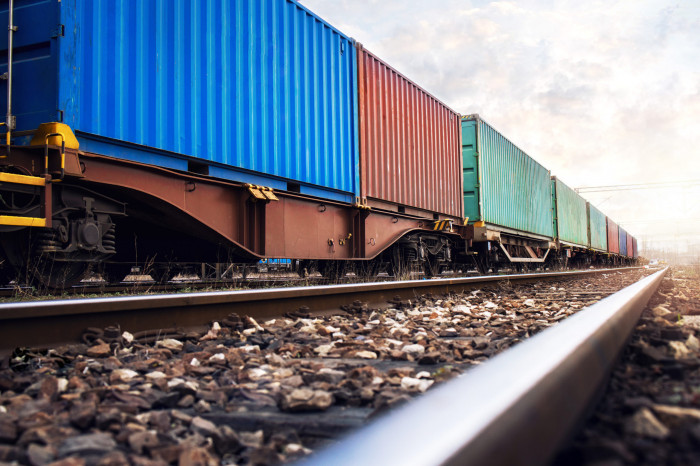
Due to the war and the constant threat to Ukrainian ports, exporters must always keep in mind the possibility of routing logistics through western border crossings. Naturally, Poland is one of the key directions here.
According to Ukraine’s Ambassador to Poland, Vasyl Bodnar, “the use of Poland as a transit hub is highly politicized and provokes the same emotional response as historical issues.”
Meanwhile, if we put politics aside, as businesses try to do, Ukrainian cargo flows actually represent a good source of revenue for Poland. The same applies to growing passenger traffic. Since the beginning of Russia’s full-scale invasion of Ukraine, Poland has become an important partner for us — but not without benefits for its own businesses.
A Driver for Polish Ports
Ukrainian cargo flows have become a driver of development for Poland’s port infrastructure, says Yevhen Peres Baro, founder of Porta MarisLogistics. The transit of Ukrainian cargo has brought both additional volumes and a new role for Poland’s transport infrastructure. In numerical terms, cargo flows have increased by at least 1.5 times.
“This is no longer simply about more cargo moving through Poland. It is about ports, railways, transshipment facilities and border infrastructure becoming more active, all of which has received an additional impetus for development. In fact, the war has made the Polish direction one of the key routes for Ukrainian logistics, and Poland has successfully converted this into a stronger infrastructure role of its own,” he says.
According to him, Poland has gained very practical advantages. First, there are new routes that do not need to be “invented” because they are already operational. Second, container handling for exports has improved, along with a stable flow of empty equipment, as many goods began to be unpacked and consolidated specifically on Polish territory. In other words, Poland has become not just a transit point, but a place where logistics are actually consolidated, redistributed and then moved further into Europe.
“Even after Ukrainian ports are fully restored, some of this will remain. First and foremost, this applies to western Ukraine, where the Polish direction has already become integrated into business logistics. If the infrastructure has already been developed, if there is strong rail connectivity and the logistics chain is already established, it will be difficult to simply abandon it,” Yevhen Peres Baro believes.
“The war has fundamentally changed Poland’s role on Europe’s logistics map. At a time when Ukraine effectively became a landlocked country, with limited access to the sea, Poland ceased to be simply a neighboring route and became one of the key logistics hubs for Ukrainian exports and imports. Its role has changed not just in scale, but in essence. Poland has become part of the region’s new logistics system. And this is important to understand: we are no longer talking only about the war and a temporary solution, but about a deeper restructuring of the transport map of Central and Eastern Europe,” he says.
The full-scale war has been not only a challenge for Poland but also a powerful catalyst for the development of port logistics, according to Global Ocean Link. The redirection of a significant share of Ukrainian cargo flows has given Polish ports an additional impetus for development, which has already translated into long-term investments.
In 2025, Polish seaports handled more than 128 million tonnes of cargo, while the Port of Gdańsk increased its container throughput to nearly 2.8 million TEU, 23% more than a year earlier. Ukrainian cargo has been one of the factors accelerating the development of container terminals, railway infrastructure, dry ports and intermodal services. For Poland, this has meant not only additional cargo handling, but also a stronger position as one of the key logistics hubs in the Baltic region.
According to Volodymyr Guz, Commercial Director of Global Ocean Link, some Ukrainian cargo will remain in Polish ports even after Ukrainian maritime infrastructure is fully restored.
Over the past four years, international shipping lines, freight forwarders and cargo owners have restructured their logistics chains, integrating Polish ports into regular routes. Some of these flows will remain there, because businesses choose not only based on geography, but also on service predictability, handling speed and logistics reliability. Therefore, Ukraine will have to compete not only on tariffs, but also on infrastructure quality, service standards and the efficiency of multimodal solutions.
Levada Cargo notes that after the outbreak of the full-scale war, Poland played one of the key roles in supporting Ukrainian logistics. This process was mutually beneficial. Poland gained additional volumes for its ports, railway operators, terminals, freight forwarding companies, road carriers and rolling-stock owners.
The scale of Poland’s intermodal market is illustrated by the following figures: in 2025, more than 1.826 million containers, or approximately 2.916 million TEU, were transported in Poland. Year-on-year, container volumes increased by almost 4.9%, while TEU volumes grew by approximately 7.4%. The share of intermodal transport in Poland’s rail sector reached 13%, compared with 10.6% at the beginning of 2022.
The performance of Baltic Hub in Gdańsk is particularly illustrative. From January to April 2026, the terminal handled 1,784 container trains: 477 in January, 385 in February, 453 in March and 469 in April. In April, the number of trains increased by 4% compared with March. The largest operators were Loconi — 28%, PCC — 19%, and Maersk — 12%.
Of Baltic Hub’s total volume during the first four months of 2026, 253 trains served Ukrainian routes: 72 in January, 54 in February, 61 in March and 66 in April. This means Ukrainian routes accounted for approximately 14% of Baltic Hub’s total rail container traffic. In April, their number increased by another 8%, from 61 to 66 trains.
For example, the Mostyska container terminal, partly thanks to the efforts of its owners — a joint project of Levada Cargo (part of the Lemtrans Group), N’UNIT and Medlog SA (part of MSC) — generates up to 1.87% of Poland’s total intermodal market, which is a significant figure for a single Ukrainian dry port.
“Polish carriers operate 40–50 of our trains every month from Gdańsk to Mostyska carrying imports, and another 40–50 back with exports. That means almost 100 trains per month — the turnover of our terminal alone. In addition, these trains bring 36,000–40,000 containers in imports and the same number in exports to the Port of Gdańsk annually. Accordingly, the port receives around 80,000 loaded containers. And these are figures from our terminal alone,” Levada Cargo representatives said.
This also applies to trains carrying grain and other products in wagons transiting Poland to EU countries — they generate revenue for Polish railway operators. Vehicles unloaded at Polish ports and transported to Ukraine by car carriers generate revenue for Polish freight terminals through these cargo operations.
The decline in transshipment volumes of Ukrainian agricultural products even led Poland’s logistics sector to experience a crisis earlier. “Transit permits mean revenue for Polish ports and terminals. Blocking transshipment harms our economy. Transit through Poland is legal and controlled by national authorities, so artificially restricting these processes makes no sense,” said Laura Golovach, CEO of CSL Group.
More Passengers
After the outbreak of the full-scale invasion, all passenger connections with Poland became the number-one routes. Trains from Kyiv, Lviv and Kharkiv to Przemyśl began operating at maximum capacity. Later, there were two Ukrzaliznytsia initiatives supported by the Polish side: the development of the Warsaw–Rava-Ruska–Lviv connection and the Nizhankovychi–Khyriv route. The former was developed in 2022 and launched in 2023. In Nizhankovychi, all the necessary infrastructure was prepared and funds were invested, but ultimately the Polish railway did not move forward with the project.
Overall, the situation benefited Polish railways, where passenger traffic increased severalfold. Poland was obliged to provide rail services to the areas around the relatively small cities of Chełm and Przemyśl, explains Oleksandr Krasnoshtan, former Director of the Department for Domestic and International Passenger Transport Organization at Ukrzaliznytsia.
Today, Ukrzaliznytsia brings its passengers to these cities. Every passenger generates revenue, as they then continue their journey on foreign railway services, which is highly beneficial for those railways. Previously, the relatively small Chełm, with a population of 50,000, and Przemyśl, with around 90,000 residents, had relatively modest passenger traffic. Now they have become hubs for travel between Ukraine and Poland. This has resulted in passenger traffic increasing dozens of times, as well as higher revenues for Polish railways and other operators working there. Economically, this is highly beneficial.
At the same time, the creation of these hubs has made it possible to develop new connections. Przemyśl, for example, gained direct connections with Berlin, Munich, Vienna and other cities. Without Ukrainian passenger traffic, such routes would hardly have been planned. The same applies to Chełm, which also gained a direct connection with Berlin. In addition, there is the private operator RegioJet, which pays Polish Railways for access to its infrastructure. This generates additional revenue for the operator, which is highly beneficial.
Oleksandr Krasnoshtan also highlighted another important aspect, particularly for residents of cities such as Chełm. “There used to be a decent, clean but rather old railway station there,” he says. “It has now been modernized and become much more convenient. People living in Chełm, Przemyśl and nearby communities have gained better connections and a level of service they could hardly have imagined before.”
Everything described above has also provided an impetus for the development of small and medium-sized businesses in Poland. Passengers often have significant waiting times between connections — sometimes 10 or even 15 hours. They rent apartments to rest, eat, walk around the city and so on. This is economically beneficial, first and foremost, for these cities.
“We have to understand that even after the war ends, this passenger traffic will not simply disappear,” emphasizes the former director of Ukrzaliznytsia’s passenger transport organization department. “People were forced to discover and test these connections, and they have already become accustomed to using them. If, for example, a passenger needs to travel from Ternopil to Katowice, flying would require taking a train to Lviv or Kyiv first, then getting to the airport and flying to Katowice. In terms of both time and cost, this would take longer than simply traveling by rail, even with a connection. Passenger traffic from Kyiv and Lviv may decrease somewhat, but from other cities it will remain and become stable. We should also take into account that once the war ends, international travel will also become possible for men. In addition, many young people study in Poland and have already settled there — they maintain ties with their families and will continue to travel.”
Oleksandr Krasnoshtan believes Ukraine should also consider how to benefit from this situation. “We need to develop and extend the connection from Chełm at least to Kovel, and ideally to Lutsk and Rivne,” he says. “It would be better for us if passengers transferred to foreign trains not in Chełm, but at least in Kovel. There is a 1,435 mm gauge railway from the border to this hub that reaches the station. It needs to be modernized and electrified so that Polish and other EU carriers can enter our territory with their own rolling stock. The same applies to the Przemyśl–Mostyska–Lviv section. However, I believe the decision regarding Skniliv was a mistake. We need to look for technical solutions to extend the European-gauge railway directly to Lviv’s main railway station. These are complex possibilities, but they exist. This is where a genuine railway hub with border and customs controls should be established, allowing a European carrier’s train to travel directly to the nearest Polish station without stopping.”
At the same time, the expert emphasizes that Poland’s partners treated Ukraine very supportively during the full-scale invasion, particularly at its beginning. “They helped us solve problems in every possible way,” he stresses. “The cooperation and assistance from the Polish side were at a very serious level, and we are grateful to our partners for that.”
Taking to the Skies
Among the factors contributing to the growth of passenger traffic at Polish airports, experts point to the full recovery of tourism after the pandemic, the expansion of routes operated by low-cost carriers such as Ryanair and Wizz Air, the growth of charter flights and other factors. However, another important factor was the flow of Ukrainian passengers.
According to the Polish Civil Aviation Authority (ULC), the country’s air transport market has been growing rapidly since 2022. That year, passenger traffic reached almost 41 million passengers. A year later, the figure rose to nearly 52 million, reaching 59 million in 2024 and 66.1 million in 2025.
The closure of Ukrainian airspace to civil aviation forced Ukrainians wishing to travel to use airports in neighboring countries, including Romania, Moldova, Slovakia and Hungary. However, according to expert estimates, Poland may have captured between 30% and 50% of this international passenger traffic. Based on the growth dynamics of Polish airports and migration flows, this could amount to at least 7 million additional passenger journeys per year associated with Ukrainians.
The statistics illustrate the trend. Poland’s largest regional international airport, Kraków John Paul II International Airport, set a historic record in 2025, serving 13,248,355 passengers — 25% more than the previous year’s figure of 11.08 million.
Rzeszów Airport is also breaking its own records. In 2025, it served more than 1.28 million passengers, 12% more than in 2024, when it handled 1.14 million passengers. Before the pandemic, in 2019, the airport served 772,000 passengers, while in 2023 the figure had already exceeded one million.
“Before the coronavirus pandemic, Lviv handled almost the same number of passengers annually. But Rzeszów is about five times smaller than Lviv,” notes Oleksandr Krasnoshtan.
However, passenger traffic showed a slight decline during the first months of 2026. From the beginning of the year through the end of May, 388,514 passengers used the airport, approximately 10% fewer than during the same period last year. Nevertheless, the airport management plans to maintain the level of 1.3 million travelers by the end of 2026.
Warsaw’s airports remain the most popular among Ukrainian passengers. “The state invests in and develops its national carrier, LOT. It has a strong network to the United States, Japan, China, Kazakhstan and other destinations. For Ukrainian passengers, this hub is geographically the most accessible,” the expert told CTS.
Poland’s main airport set a historic record last year, serving nearly 24 million passengers — 13% more than the previous year.
By contrast, Lublin Airport has not demonstrated similarly rapid growth, notes Oleksandr Krasnoshtan. However, he believes that political considerations played a role there. “Poland is trying to protect its carriers from the expansion of low-cost airlines,” he explains. “That factor came into play there.”
Polish statistics do not separately record passengers by nationality, but aviation market analysts are almost unanimous that Ukrainian transit was one of the key drivers of Polish airports between 2022 and 2025.