

How Ukraine’s Logistics Will Change: New Hubs, Routes and Supply Models
One destroyed distribution center means hundreds of stores that can be left without their usual supply within just a few hours. Following a series of Russian attacks, Ukrainian retailers have lost hundreds of thousands of square meters of warehouse space and are now essentially rebuilding their supply systems from scratch: splitting inventory, changing routes, and looking for new hubs both in Ukraine and abroad.
How ATB, Silpo, Fora and VARUS are restructuring their logistics, how much it costs, and whether this will affect prices — Retailers.ua spoke to industry representatives to find out.
Kyiv region suffered the largest losses of warehouse infrastructure
The losses to warehouse infrastructure in the summer of 2026 were among the heaviest since the beginning of the full-scale war. The facilities most affected were top-class A warehouses, which at the time of the attacks were fully stocked and leased down to the last square meter.
In just a few weeks, around 400,000 sq m of Class A logistics real estate in Kyiv and the Kyiv region were put out of operation. If other regions are taken into account, the figure is around 500,000 sq m. This represents approximately 30% of all Class A warehouses. At the time, all affected facilities were leased, regardless of their class or quality, says Dmytro Kalinichev, Commercial Director of Dragon Capital Property Management.
ATB is one of the most illustrative examples of the scale of losses to warehouse infrastructure. Since the beginning of the full-scale war, the retail chain has lost more than 110,000 sq m of warehouse space, accounting for more than half of its total capacity. The company’s total losses are estimated at UAH 15 billion.
In 2025–2026, two of the chain’s distribution centers in Dnipro and Kharkiv, with a combined area of more than 65,000 sq m, were destroyed. Two other DCs — in Odesa and Dnipro — were significantly damaged.
In 2026, ATB’s losses from the destruction of distribution centers amounted to around UAH 65 million, while losses from destroyed goods reached UAH 728 million. The loss of a single DC affects the supply of approximately 300 stores across the chain.
For Fozzy Group, which includes Silpo and Fora, one of the most difficult episodes of the summer was the night of August 4–5. During the attack, four of the group’s distribution centers were hit simultaneously. Fora’s losses from the attack are estimated at UAH 1.15 billion.
VARUS’s logistics infrastructure was also affected. The company does not disclose specific facilities or the amount of losses for security reasons.
Smaller warehouses are more expensive but safer
Following the attacks, demand for warehouse real estate has changed. According to Dmytro Kalinichev, tenants are increasingly occupying warehouse space on the outskirts, primarily in the western direction.
However, logistics is gradually shifting not only to western Ukraine but also abroad. At Global Ocean Link, another option is being considered: keeping part of imported inventory in warehouses in Poland, Hungary and other Central European countries, and bringing goods into Ukraine gradually, in smaller batches.
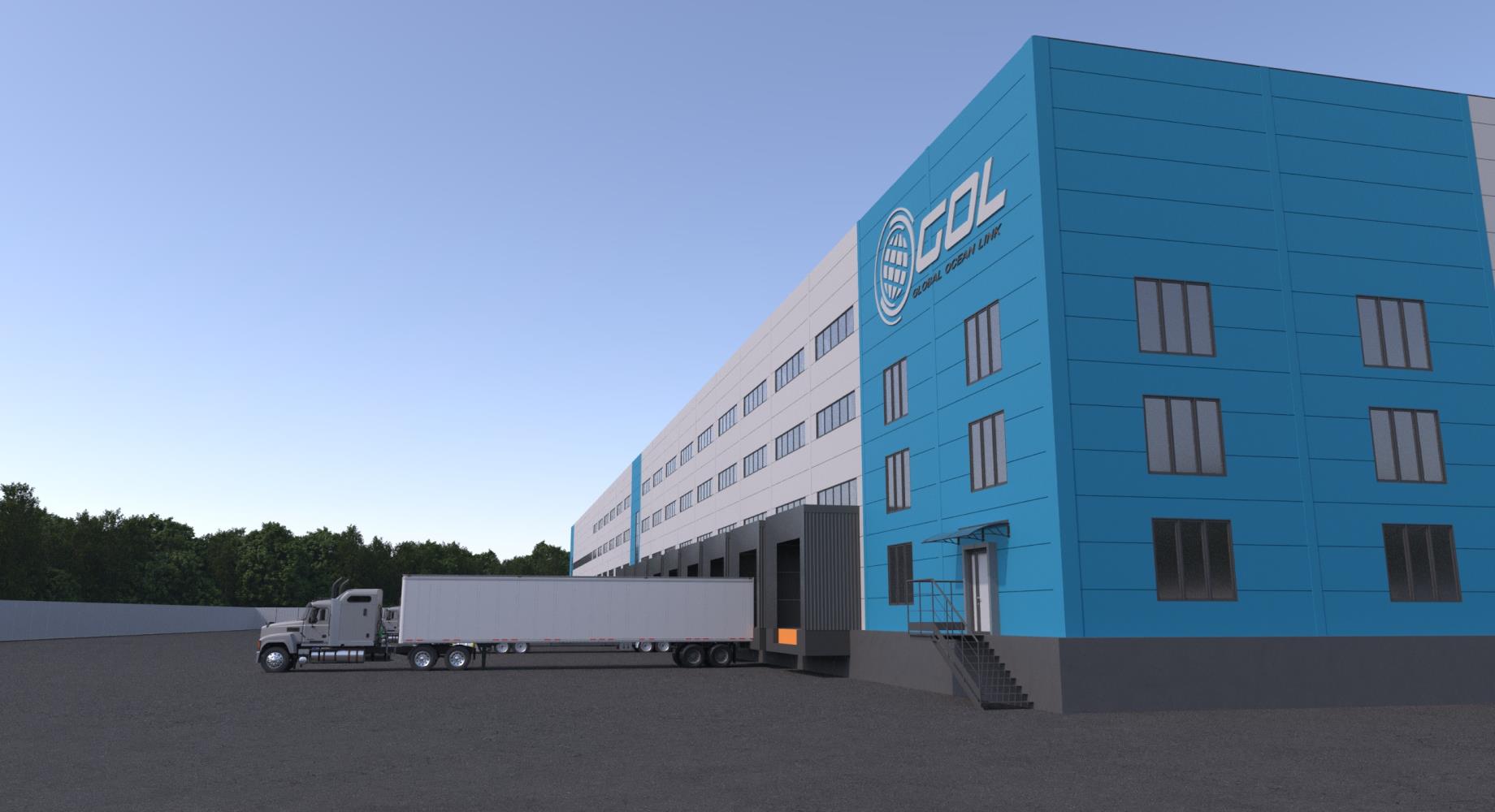
This trend is already visible in new logistics projects. In particular, Global Ocean Link is developing a hub of more than 13,500 sq m in Solomonovo, Zakarpattia, near the borders with Hungary and Slovakia.
Large retailers are increasingly looking not for one large warehouse, but for several smaller ones — roughly from 1,500–2,000 to 3,000–5,000 sq m, says Dmytro Kalinichev, Commercial Director of Dragon Capital Property Management.
According to Global Ocean Link experts, part of the inventory can be transferred to multi-client and 3PL warehouses, while regional hubs and cross-docking facilities can also be used.
The main principle is that the loss of one facility should not bring the entire system to a halt, says Pavlo Lynnyk.
Operating one large distribution center is simpler and cheaper. It makes it possible to reduce the number of routes and shipments, as well as save on other operating costs.
However, the war has changed the very approach to efficiency. Previously, retailers calculated how much each link in the logistics chain cost. Now they also have to consider how much losing that link could cost.
Russian strikes are also forcing warehouse developers to change their approach. At Dragon Capital, for example, the strategy is being reconsidered: the company plans to build smaller warehouse complexes and distribute them across different locations.
75% of manufacturers are not ready to switch to direct delivery
At first glance, the simplest solution would be to deliver goods directly to stores, bypassing damaged distribution centers. However, for most manufacturers, this is an overwhelming task. Regularly supplying hundreds of stores requires their own vehicles, drivers, warehouse capacity and additional staff.
According to an estimate by Arsen Didur, Executive Director of the Union of Dairy Enterprises of Ukraine, around 75% of manufacturers currently lack the resources to fully switch to such a model. Processing companies are physically unable to provide direct delivery to all 1,300 ATB stores or the 800–900 locations operated by Fozzy Group.
As a result, the market has to adapt literally on the go. “Depending on the security situation, logistics solutions can be adjusted quickly, even within a single day,” VARUS says.
Should we expect shortages and a price spike?
Experts’ estimates vary, but they all agree on one thing: logistics is becoming more expensive. How much this increase will affect final prices is a more complicated question.
According to Global Ocean Link, even with a properly designed distributed model, direct logistics costs will increase by 5–15%. Artem Retin, co-owner of RetailPro, forecasts a 10–15% increase in storage and delivery costs, and on some routes bypassing damaged distribution centers, costs could rise two- to threefold. In his assessment, this could add 1–5% to final prices.
Logistics costs could rise even more for goods requiring special storage conditions. According to a forecast by Yevheniia Loktionova, Director at UTG, delivery costs for dry goods will increase by 15–25%, while refrigerated goods could become 35–50% more expensive to transport. As a result, prices for these products could rise by 3–5% and 7–12%, respectively.
VARUS confirms that logistics costs are increasing, but cautions against automatically passing these increases on to price tags. The final cost of a product depends not only on transportation and storage, but also on raw material prices, procurement costs, exchange rates, seasonality and other factors. The chain is trying to offset some of the additional costs by optimizing its own processes.
The most vulnerable to logistics disruptions remain products with short shelf lives or those requiring an uninterrupted cold chain: fresh fruit and vegetables, chilled meat and fish, dairy products, as well as ice cream and semi-finished products.
These problems are particularly acute in frontline regions, where supply disruptions are compounded by regular power outages. Consumer behavior is changing there as well: people are more likely to choose canned goods, groceries and other long-life products, while demand for perishable goods is declining.
Will there be empty shelves? The short answer is no. Retailers do not expect systemic shortages. Individual products or brands may disappear from stores for several days due to destroyed inventory or delivery delays, but in most cases they are replaced with alternative products.
This, in particular, happened at Silpo after strikes hit four Fozzy Group distribution centers. Some shelves experienced temporary gaps, but the chain quickly redirected product flows.
The losses we have suffered are significant. The most difficult thing for us was the loss of our colleagues… However, we are rapidly restructuring our logistics, and for us it is a matter of honor to do everything possible to ensure that our Guests once again see the familiar, fully stocked shelves, Fozzy Group said.
It should be recalled that Prime Minister Serhii Koretskyi instructed the Ministry of Economy, ARMA and the State Property Fund to search among state-owned premises for reserve space to distribute goods. ARMA is reviewing around 250,000 sq m of seized property and has already inventoried 60,000 sq m, while several hundred thousand more square meters have been identified on the balance sheets of state-owned enterprises.
However, the retail chains interviewed by journalists have not yet received any state-owned premises. NOVUS, in particular, notes that most of these facilities lack temperature-controlled zones, ventilation and moisture protection, which is why the company is independently leasing ready-to-use commercial space.
Retailers do not expect empty shelves. But keeping them stocked now costs significantly more. Retail chains are forced to duplicate warehouses, redesign routes and distribute inventory across multiple locations so that a strike on a single facility can no longer paralyze the supply of hundreds of stores.