Air freight is storming again: why finding a flight is no longer enough for business

Even in early 2026, one might have had the impression that the air cargo market had begun to calm down. After the high volatility of previous periods, rates on the Asia-Europe route appeared more restrained, and the market showed signals of aligning supply and demand. In the first quarter, the rate on the Asia-Europe corridor dropped to $3.64 per kilogram, compared to $5.28 a year earlier. But air freight is a logistics segment where calm almost never means stability.

Recent weeks have proven this once again. Global air cargo transportation is back to operating in a rapid restructuring mode. The year started with strong demand: IATA recorded a growth in global air cargo demand of 5.6% in January and 11.2% in February year-on-year. However, by spring, the market began moving again under geopolitical pressure due to the conflict in the Middle East, problems with air routes, rising fuel prices, and a new shift of some urgent cargo from sea to air. By mid-April, the average global spot rate rose to $3.76 per kilogram, which is 37% higher than a year ago.

“The problem with the market today is not just that air freight can become more expensive. The problem is that it becomes less predictable precisely at the moment when businesses need predictability the most. When rates on certain routes jump by tens of percent, when hub facilities face capacity reductions, and cargo follows detour routes, a company can no longer afford the luxury of thinking in terms of a single flight or a single rate. Due to current disruptions, forwarders began looking for completely atypical routes for cargo from Asia to Europe, even including transit through Los Angeles. This is a good indicator of how atypical the market has become,” – Pavlo Lynnyk, CEO of GOL.

For Ukrainian business, this change is particularly noticeable. Since the closure of Ukraine’s airspace, air transportation has long ceased to be a direct service. Today, it is a multi-link system involving an Asian departure airport, a European entry hub, a road leg, customs coordination, a delivery schedule, and a set of risks that must be kept under control at every stage. This is why the real price of air logistics consists of more than just the rate per kilogram. It consists of available capacity, the right hub, connection time, risk of delay, and the ability to quickly switch routes. In other words, consolidation, choosing the optimal hub, long-term contracts, flexible routing, and the Air + Road combination have become basic cost management tools today rather than an option.

In 2026, air freight no longer sells speed as its primary value. It sells control. Control over the delivery time. Control over the situation when the sea has become too slow, and production or sales can no longer wait, the CEO of GOL shares his opinion. This is why air freight is now especially important for electronics, pharmaceuticals, auto components, high-value goods, and urgent industrial components.

“Therefore, for business today, the question is no longer: ‘How much does air freight cost?’ It is more correct to ask another question: ‘Which part of my supply chain should air freight protect—and how to do it without losing control over the economics?’ This is where modern logistics begins. Not with an individual shipment. And not even with an individual tariff. But with the ability to assemble the right delivery model for a specific risk, a specific product, and a specific business goal. Therefore, in this new reality, the role of the logistics company is also changing. Previously, the market often looked at a forwarder as someone who organizes transportation. Today, that is no longer enough. Business needs a partner who does not just find a route but manages the entire logic of the supply: from choosing the corridor and hub to the cost model and backup scenarios. And this is exactly the role our company is moving toward today,” – Pavlo Lynnyk, CEO of GOL.


Multimodal Delivery of Battery Energy Storage Systems (BESS) from China to Ukraine

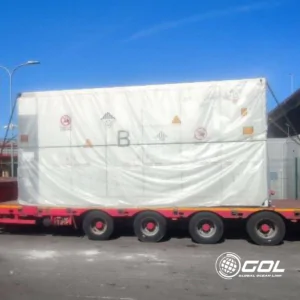
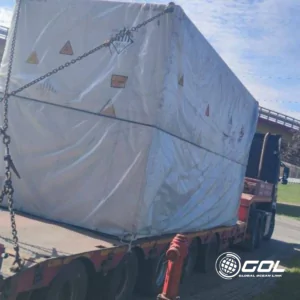
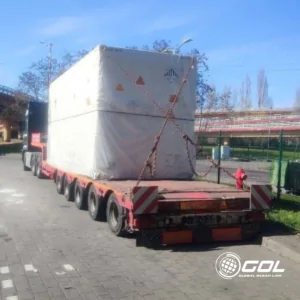
Our team has successfully completed the transportation of 20 BESS containers with a total capacity of 120 MW via the route: Shanghai — Gdańsk — Kyiv Region. This cargo required exceptional attention to safety, meticulous coordination at every stage, and strict adherence to international standards for transporting lithium-ion systems.

To ensure maximum safety and meet all technical requirements, High Cube (HC) containers were utilized, perfectly suited to the specific nature of the cargo.

Hero of Logistics: Andrii Sharkhun
✉️: [email protected]


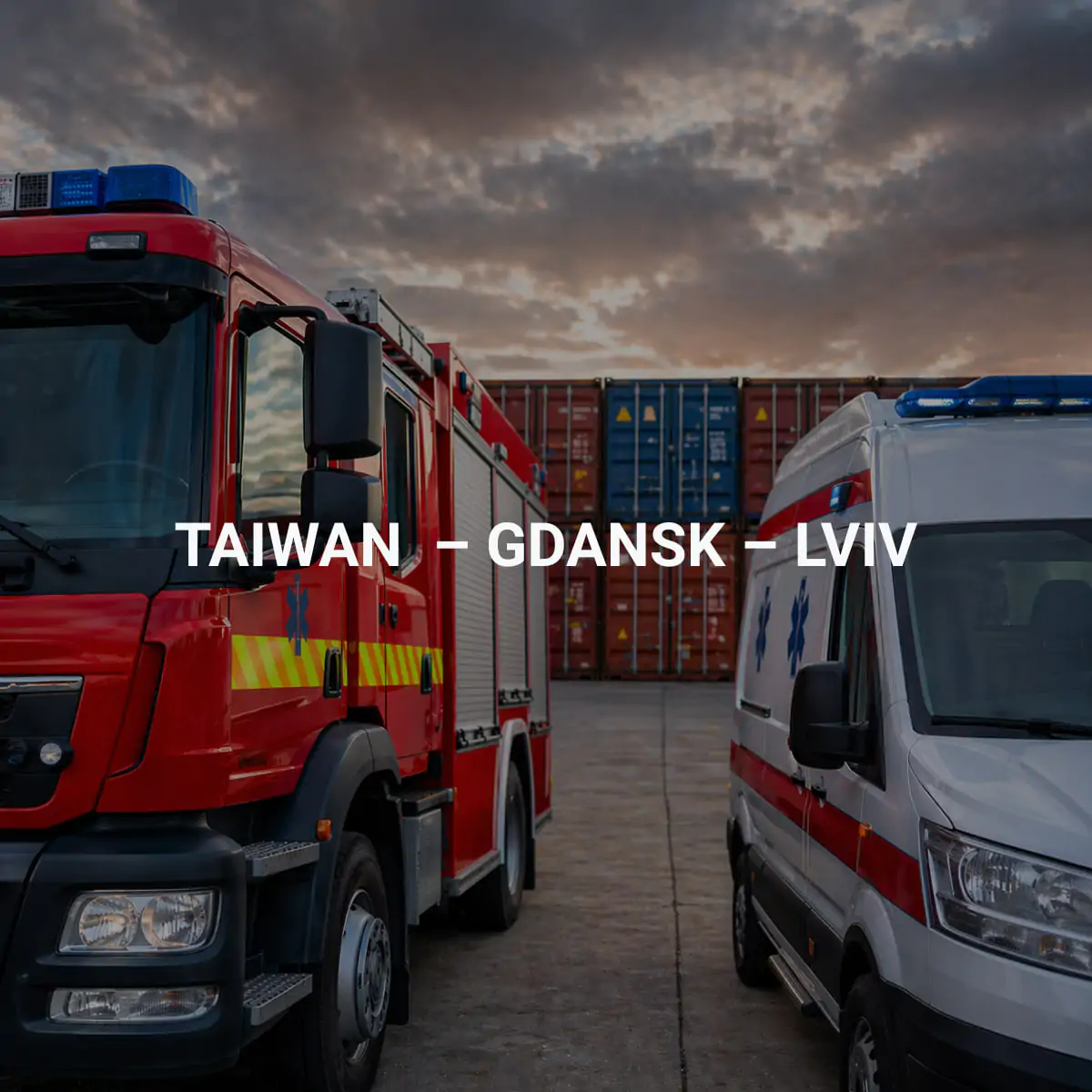
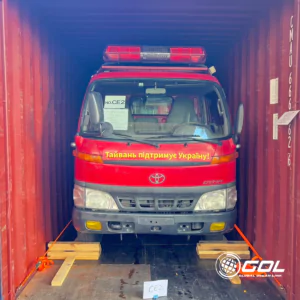
Successful humanitarian aid delivery — 59 units of special-purpose vehicles for Ukraine

Route: Taiwan ➔ Gdańsk ➔ Lviv

For the transportation of this special equipment, various types of 40-foot containers were used. Fire trucks were placed on 9 Flat Rack platforms to ensure the secure fastening of oversized units. At the same time, ambulances were delivered in 31 High Cube containers — the increased height of these containers provided the necessary space for safe sea transit.

We are proud to be part of such projects.
Global Ocean Link — your reliable logistics partner 🌐

Logistics Hero: Doda Rostyslav
✉️: [email protected]


Logistics Ratings Missing in Ukraine: How a Client Can Distinguish “Cheap” from “Reliable”

Pricing issues in the logistics industry are extremely relevant today. A particularly significant aspect is that an emphasis on “cheap at the start” typically results in a much higher cost of error later. This can manifest as breaches of agreed deadlines, downtime, fines, or loss of clients. That is why Ukraine needs a reliability rating for logistics companies, rather than a price ranking.

What the Market Watches vs. What it Overlooks

One of the key problems facing the modern logistics services market is that the focus is centered on the rate, while a whole range of other factors remains overlooked, namely:

  • Risk profile;

  • Service discipline;

  • Readiness for force majeure;

  • Transparency.

Therefore, a selective focus on the price factor becomes the fundamental error in selection, leading to partnerships that ultimately disappoint.

Current Insights into the Logistics Sector

To address this, let’s highlight three key metrics that are most significant for assessing a logistics partner’s reliability:

  1. Speed and quality of response to force majeure;

  2. Transparency and process control;

  3. Company experience and longevity, which serves as evidence of reliability.

In my opinion, it is equally vital to consider scenarios where a low freight rate hides the exclusion of THC (Terminal Handling Charges), local port fees, storage, or free time. Furthermore, vehicle downtime often occurs, fuel surcharges appear, and there are re-issuances of bills of lading or additional certificates that were supposedly agreed upon in advance.

For example: A client saves money at the start but loses both time and money later. Consider a customs clearance case where a competitor offered a 30% cheaper rate for filing a Customs Declaration. However, the “cheapest” broker submitted an incorrect commodity code, forcing the importer to pay an additional 1.5% in duties—amounting to approximately $10,000.

It is also crucial to watch for “red flags” that indicate reliability is unlikely. This includes “guarantees” of transit time and cargo safety. While these factors can be managed with care, they cannot be legally guaranteed.

5 Significant Criteria to Consider When Choosing a Logistics Provider

When asked about selection criteria, I believe you should focus on the following:

  • KPIs for maintaining ETD conditions: % of shipments without disruptions (no rollovers, no route changes due to the forwarder’s fault, no critical delays);

  • KPIs for maintaining quoted costs: % of shipments without additional unplanned expenses;

  • Volume metrics: Not the primary factor, but important to show how the company performs under load;

  • Annual volume: (TEU / MT / trucks / charters);

  • Client retention rate: (Year-over-year).

Additionally, a global agent network should be added to this list.

Additional Criteria for a Reliable Carrier

Beyond the aforementioned points, you should also consider:

  • The carrier’s experience in their specific niche;

  • Transit times;

  • Availability of their own fleet;

  • Recommendations from B2B clients;

  • Pricing transparency and a clear breakdown of all services included in the tariff;

  • Level of customer service, including 24/7 support, convenient communication channels, and cargo status reporting;

  • Ability to offer alternative routes in case of force majeure;

  • Capability to provide necessary shipping conditions for specialized cargo (e.g., hazardous materials, etc.).

If you take all these factors into account when choosing a freight forwarder, it will significantly increase the chances of a successful partnership.